
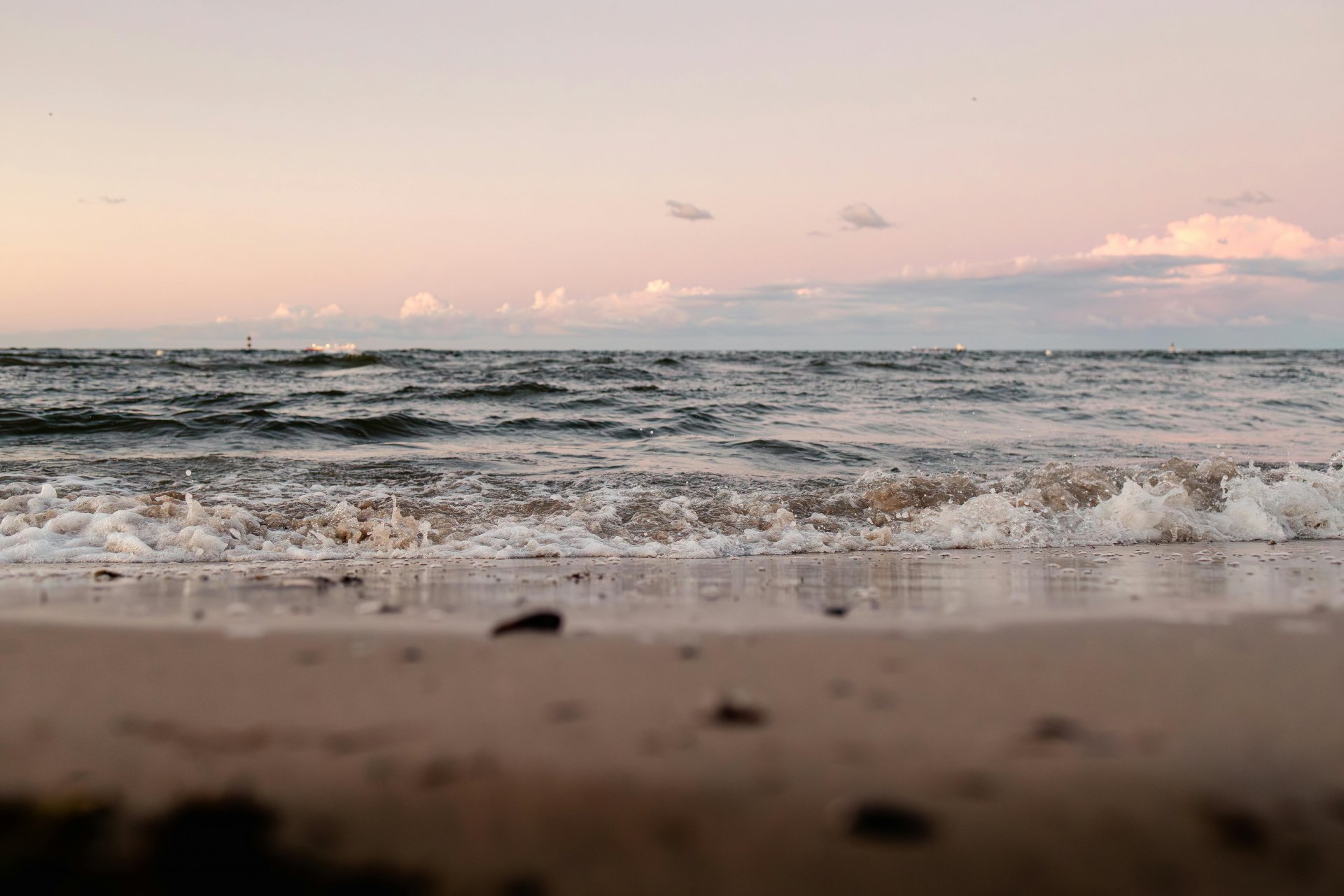
Baltic Sea Day is marked in Lithuania on the first Saturday of September. Discussing the biggest problems and challenges facing the Baltic Sea, Nijolė Remeikaitė-Nikienė, Head of the Marine Environment Assessment Division of the Environmental Protection Agency, stresses that the Baltic Sea environment is negatively affected both by human activities and by natural processes already under way in the water body itself.
According to her, eutrophication remains one of the most acute problems of the Baltic Sea. “Based on the regional assessment carried out by the Helsinki Commission (HELCOM), the inflow of nutrients causing eutrophication into the Baltic Sea via river waters has decreased – nitrogen by 12% and phosphorus by 28% compared with the 1997–2003 period. Nevertheless, about 94% of the Baltic Sea fails to achieve good status due to eutrophication. Secondary pollution accumulated in the bottom sediments of the Baltic Sea also plays an important role here.”
The Baltic Sea is also characterised by densely populated coastal areas, home to about 85 million people. More than 200 larger rivers flow into it, carrying substantial volumes of water together with treated, partially treated or even untreated wastewater and runoff from agricultural fields.
Pollution by hazardous substances is another long-standing and continuing problem of the Baltic Sea. “According to the Baltic Sea regional assessment, about 80% of the Baltic Sea fails to achieve good status due to concentrations of hazardous substances. Considerable attention has recently been paid to pharmaceutical substances, which enter the Baltic Sea from wastewater treatment plants,” says Nijolė Remeikaitė-Nikienė.
Although the Baltic Sea has no floating garbage islands like those in the Pacific Ocean, the amount of litter found on the Lithuanian coast exceeds the target value for good environmental status (<20 litter items/m²) almost fivefold.
The Baltic Sea is also one of the busiest seas in the world, with intensive shipping traffic. It is estimated that about 2,000 ships are sailing it at any one time, and the underwater noise they generate disturbs marine wildlife.
According to Nijolė Remeikaitė-Nikienė, the Baltic Sea ecosystem is also undoubtedly facing the negative effects of climate change – changes in water temperature, water level and ice cover to which marine organisms must adapt.
She points out that the Baltic Sea ecosystem is affected by human activity carried out in the water body itself, but activity on land also has a major influence. “The Baltic Sea is polluted even by countries that do not border it, via river basins and atmospheric pollution. That is why every person’s contribution matters, even for those who do not live by the sea. The public can contribute directly and indirectly to a cleaner environment, including a better Baltic Sea environment, by sorting waste, using fewer single-use bags, saving resources, not leaving litter on beaches, taking part in environmental clean-up campaigns, choosing eco-labelled products, replacing household chemical cleaners with safer or natural alternatives, and returning old medicines to pharmacies for disposal.”