
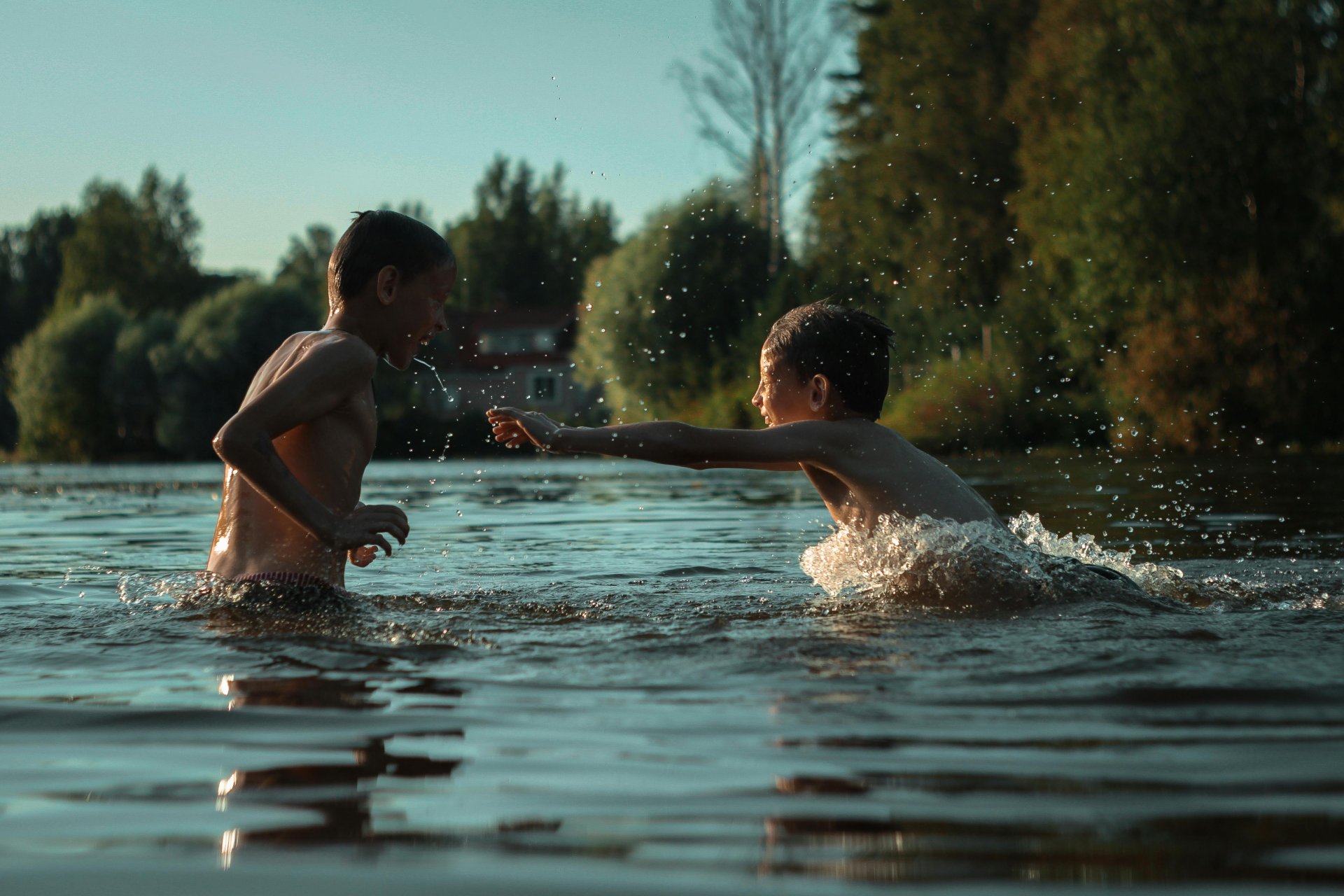
The European Environment Agency (EEA) has published 2024 bathing water quality data for European Union countries, according to which 85% of European bathing sites meet the highest EU quality standards, and 96% of all officially designated EU bathing waters met the minimum quality standards.
The EEA presented 2024 water quality data from more than 22,000 bathing sites in the 27 European Union countries, as well as Albania and Switzerland. In five countries – Cyprus, Bulgaria, Greece, Austria and Croatia – 95% or more of bathing waters were of excellent quality.
Lithuania’s position has slipped slightly compared with 2023. In 2023, 89.3% of Lithuania’s bathing waters were of excellent quality, a result that placed Lithuania in the top ten, ahead of countries such as Spain, Finland, Latvia, Sweden and the Netherlands.
According to the 2024 data, 86% of Lithuania’s bathing waters were of excellent quality, placing Lithuania 11th among the 27 European Union member states plus Switzerland and Albania.
The ecological status of water bodies is not good
It should be noted that this assessment did not address the overall ecological status of surface and ground waters, but pollution that affects human health and can cause ailments or disease. Although the bathing water at most European beaches is excellent in this respect, the assessment stressed that overall pollution of surface and ground waters is high and may increase further due to both climate change and human activity.
The ecological status of rivers is assessed using physico-chemical indicators (dissolved oxygen, organic, nitrogen and phosphate substances) and biological indicators (phytobenthos, zoobenthos, phytoplankton, fish fauna, aquatic flora), as well as specific pollutants and hazardous substances. The ecological status of lakes and ponds is assessed using physico-chemical indicators (organic, nitrogen and phosphate substances and transparency) and biological indicators (phytobenthos, zoobenthos, phytoplankton, fish and aquatic flora), as well as specific pollutants and hazardous substances.
The consolidated 2023 report on the state of Lithuania’s environment states that 35% of surface water bodies in Lithuania meet good status criteria, while 65% do not. Water body status is most negatively affected by diffuse pollution: leaching of compounds (nitrogen and phosphorus) that enter the soil with livestock manure and through unbalanced use of mineral fertilisers, arising mostly from agricultural activity.
Elevated nitrogen and phosphorus concentrations are the main driver of eutrophication – the rapid growth of algae (“water bloom”) – which leads to overgrowth and silting of water bodies, declining fish diversity and fish kills. Diffuse pollution also enters water bodies from households not connected to centralised wastewater collection networks. These sources release not only nitrogen and phosphate substances but also organic and hazardous substances.
Water quality is also affected by increasingly hot summers. During hot, dry summers the amount of water in rivers and lakes decreases and pollutants entering a water body are not sufficiently diluted. As a result, nitrogen and phosphorus concentrations also rise in summer, and these are the main driver of eutrophication. Eutrophication processes are likely to accelerate as the climate warms.
River channel modification and hydropower operations have a significant negative impact on biodiversity, resulting in poor and low-value riparian vegetation. Hazardous substances enter waters with industrial and domestic wastewater and from agricultural activity.
The Agency’s specialists have prepared two separate interactive maps of Lithuanian surface water quality: the first presents data on rivers, the second on lakes and ponds.
The river water quality map is available here.
The lake and pond water quality map is available here.